
Home
BR27199433 Enhancing the rehabilitation and support services for children with musculoskeletal and neurological disorders through the implementation of innovative robotic devices
The project aims to enhance rehabilitation and support services for children with musculoskeletal and neurological disorders through the development and implementation of innovative robotic technologies. It focuses on robot-assisted gait training, balance and motor-function assessment, pediatric rehabilitation safety, and socially assistive robotics. The project integrates robotic systems, biomechanical assessment, virtual reality, sensor technologies, and data-driven methods to improve the effectiveness and personalization of rehabilitation.
Purpose
Results
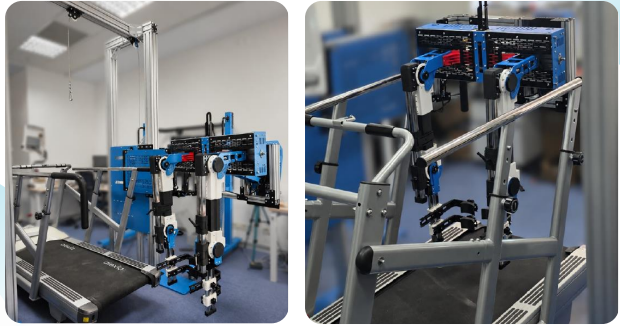 Integrated Robotic Environment for Pediatric RehabilitationAn integrated robotic environment for pediatric rehabilitation has been established, combining gait-training systems, robotic perturbation systems, virtual reality, sensor technologies, and socially assistive robots. The environment enables comprehensive assessment of gait, balance, motor performance, and children’s interaction with robotic rehabilitation systems.
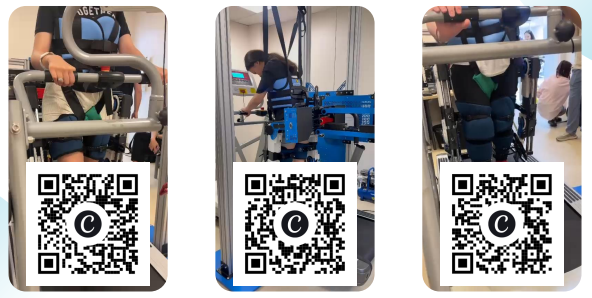 Multimodal Assessment of Motor Function and Rehabilitation ProgressThe project involves the collection and analysis of multimodal data, including gait parameters, balance measures, biomechanical characteristics, and sensor-based indicators. These data are used for objective quantitative assessment, identification of meaningful rehabilitation progress indicators, and development of new indices to support personalized rehabilitation.
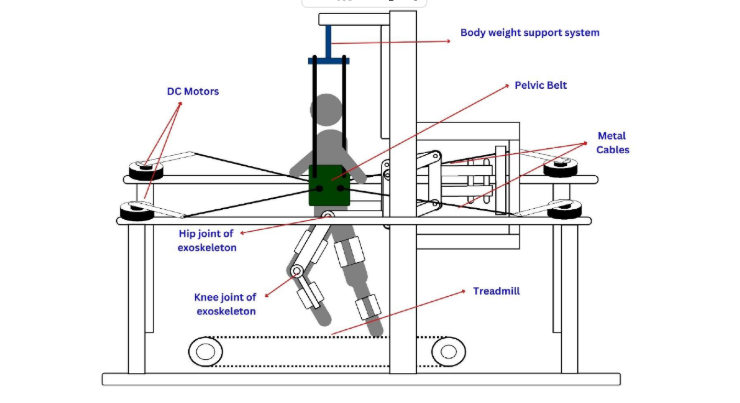 Enhanced Safety of Pediatric Robotic RehabilitationDesign and control requirements for robotic systems intended for pediatric use have been developed and refined. Particular attention has been given to anatomical alignment, mechanical load limitation, range-of-motion control, adaptive control algorithms, and risk reduction during robot-assisted therapy.
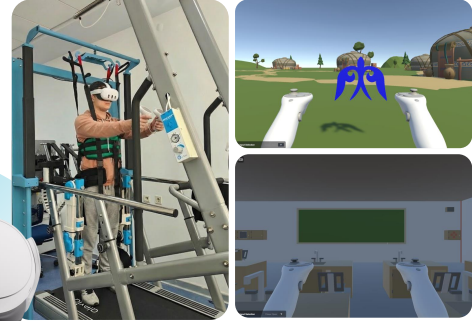 Application of Socially Assistive Robotics in Pediatric RehabilitationSocially assistive robotic technologies have been integrated into rehabilitation and research sessions to increase children’s engagement and support cognitive and communication-related activities. The findings are being used to assess the potential of human–robot interaction within comprehensive pediatric rehabilitation programs.