Robotic Perturbation-Based Training for Balance A data-driven balance platform combining robotics, sensors, and adaptive AI
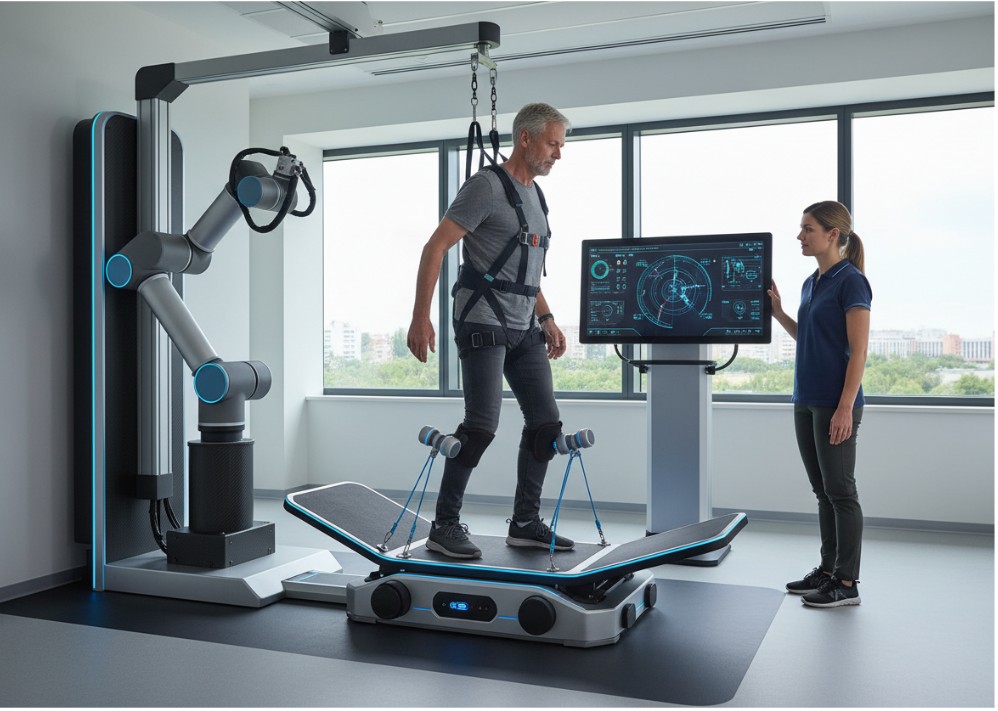
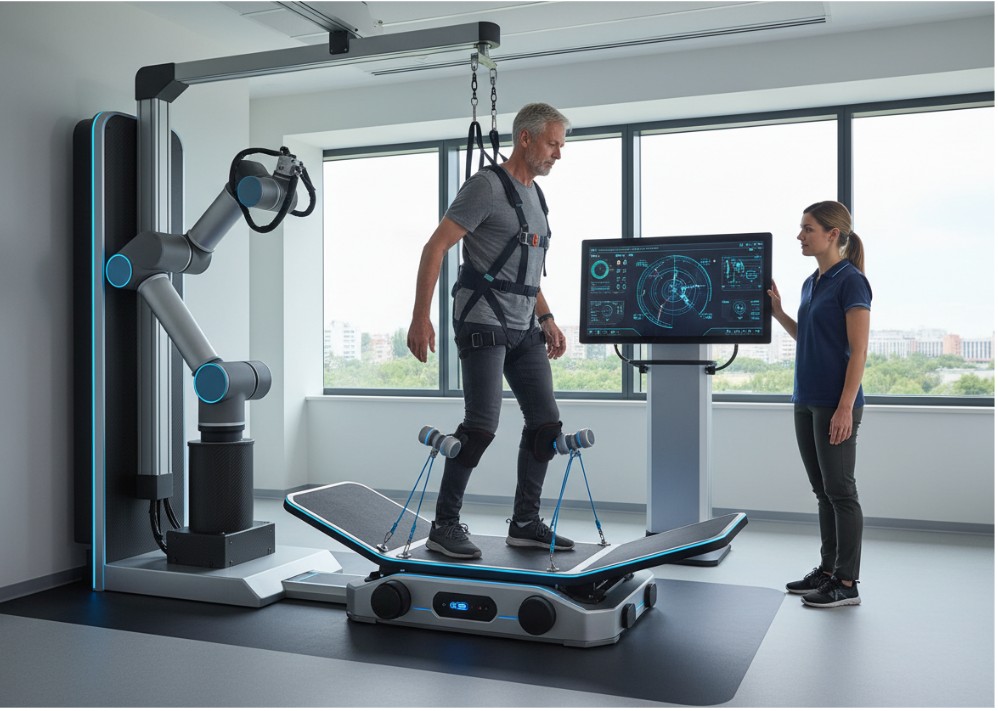
At CEMRR, balance is not treated as a “soft skill” coached by observation, it is treated as a measurable control problem that can be trained, optimized, and validated. Building on our robotics and rehabilitation portfolio (including gait and pediatric rehab platforms, sensor-driven assessment, and AI-enabled decision support), we plan to advance Robotic Perturbation-Based Training for Balance as a next-step program that converts balance therapy into a data-driven training loop.
The core idea is simple: recovery improves when the challenge is precise and repeatable. Using a robotic platform, we will deliver controlled perturbations: small, safe pushes/pulls, surface shifts, and directional disturbances, that trigger real postural reactions. Unlike conventional exercises, robotics lets us tune magnitude, direction, timing, and frequency and progress difficulty objectively across sessions.
We will combine standard clinical tests (e.g., PBS, TUG, 10MWT/6MWT where relevant) with multimodal sensing such as IMUs, EMG, and pressure/force signals, translating responses into clear indicators: reaction latency, recovery stepping strategy, symmetry, fatigue signatures, and stability margins. On top of this, we will apply AI to personalize training, adjusting perturbations in real time based on how the patient responds, moving toward assist-as-needed difficulty scaling.
Clinically, the focus is high-impact pathways where balance is a bottleneck: post-stroke rehabilitation, pediatric cerebral palsy, and orthopedic recovery with validation through our hospital and rehabilitation partners. With CEMRR’s team capacity and ongoing projects ecosystem, this work is positioned to progress from prototype protocols to a scalable platform that delivers safer training, stronger evidence of progress, and measurable improvements in functional mobility.