VR and AR Transforming Rehab for Kids with Cerebral Palsy in Kazakhstan
Rehabilitation for children with cerebral palsy (CP) has always walked a fine line: the exercises that rebuild strength, coordination, and confidence are often repetitive, physically demanding, and—let's be honest—boring for a kid. Traditional occupational and physical therapy relies on blocks, balls, mirrors, and endless repetitions of "reach for the toy" or "walk this line." Engagement drops, motivation fades, and progress slows.
Enter extended reality: augmented reality (AR), virtual reality (VR), and mixed reality (MR). At the National Center for Children’s Rehabilitation (NCCR) in Astana, researchers from Nazarbayev University’s Center for Excellence in Medical Robotics and Rehabilitation (CEMRR) have built a prototype system that turns therapy into play. Using the Unity engine and Microsoft’s Mixed Reality Toolkit (MRTK), plus Meta Quest headsets, they’ve created gamified worlds where kids with moderate CP practice upper-body coordination, grasp, decision-making, and even walking, all while the brain and body get tricked into thinking it's just a game.
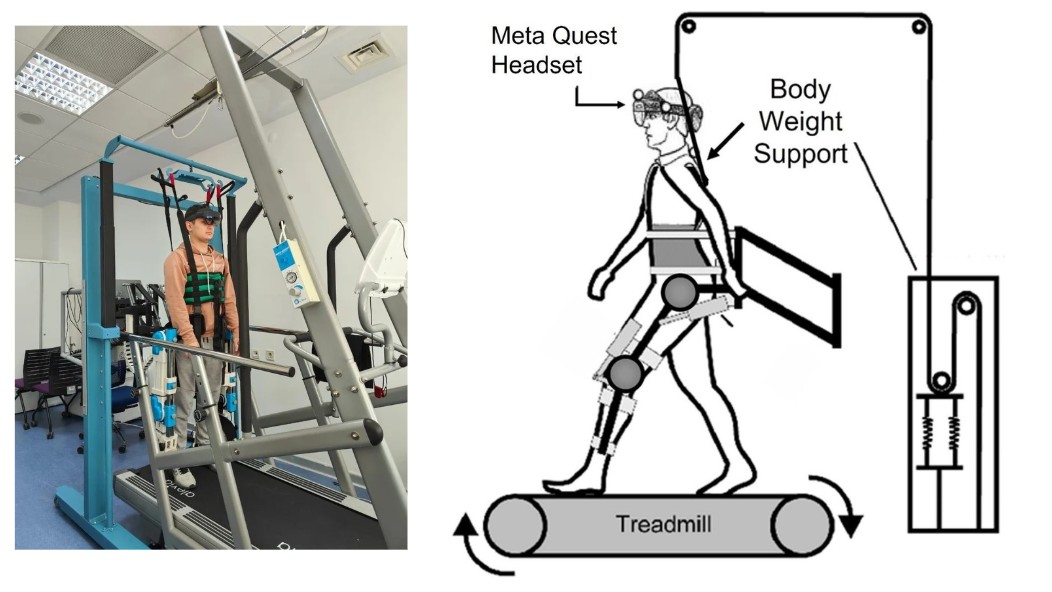
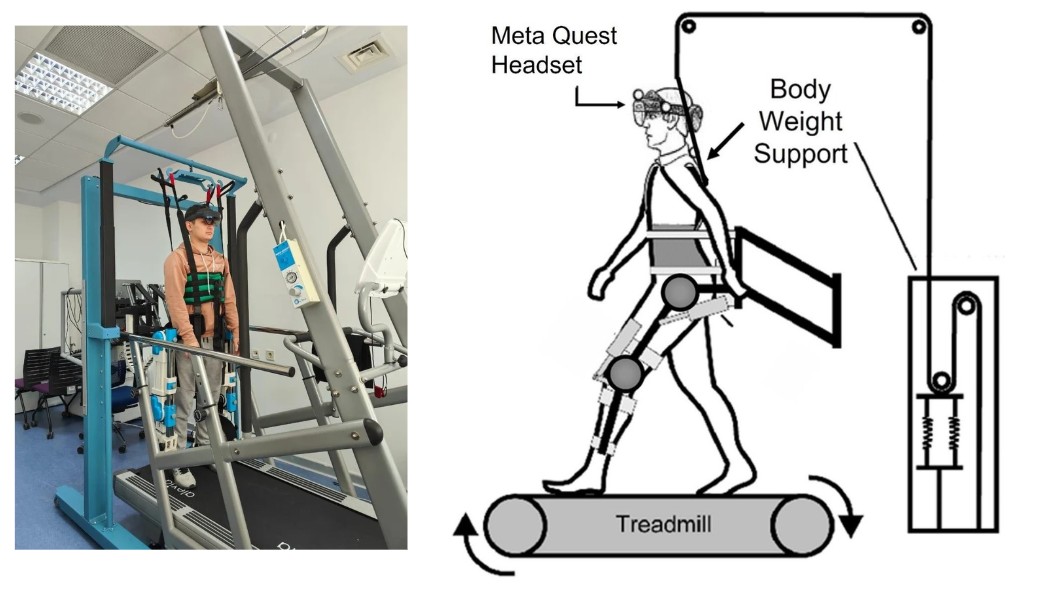
The core idea is simple but powerful: disguise repetitive motor practice as adventure. A child wearing a VR headset might stroll through a colorful cartoon city on a treadmill synced to the P.GEAR robotic gait exoskeleton. The faster they walk in real life, the quicker the virtual avatar moves. Coins sparkle along the path, requiring a quick sidestep, a brief pause, or even a small jump to collect them. Reach a checkpoint in time? A leaderboard updates with your best score, cheers erupt, and the next level unlocks with fresh obstacles. The system streams real-time data (step count, belt speed, gait phases) over Wi-Fi, keeping latency under 80 ms so the virtual world feels perfectly coupled to physical effort.
For upper-limb work, separate games target hand-eye coordination and fine motor control. In one, kids play a virtual piano: melodies play, keys light up in sequence, and pressing the right notes in rhythm produces harmonious sounds (wrong ones clang discordantly). Early levels feature short, simple tunes for basic finger movements; harder ones add longer sequences, time pressure, and repeating patterns to sharpen precision and memory. Visual and auditory feedback reinforces correct actions, while scoring unlocks new songs, turning error correction into self-directed learning.
Another mechanic uses rotating targets: slow-spinning shapes appear, and the child must time throws or reaches to hit them accurately. Bright, large, slow-moving objects minimize confusion or sensory overload, key for kids with CP who may have visual or attentional challenges. Therapists tweak difficulty on the fly: more targets, faster rotation, or added colors.
Why does this matter? Because evidence keeps mounting that immersive tech outperforms traditional methods alone. Recent systematic reviews and meta-analyses (from 2024–2025) show VR interventions deliver moderate to large gains in gross motor function, balance, upper-limb coordination, and activities of daily living in children with CP. Non-immersive setups help with balance and independence; robotic-VR combos shine for gait and motivation. Younger kids (<6 years) often see the biggest effects, likely due to heightened neuroplasticity and gamification appeal. Studies using tools like the Gross Motor Function Measure (GMFM), Berg Balance Scale, and 6-Minute Walk Test (6MWT) consistently favor VR-augmented training especially when paired with robotics.
In a pilot at NCCR, 10 children (5 intervention, 5 control) completed three weeks of P.GEAR treadmill sessions: the intervention group walked in the VR cityscape, while controls did standard manual therapy. Trends strongly favored the combined approach on the 6MWT greater gains in walking endurance though the small sample limits statistical power. No serious adverse events occurred, and cybersickness was minimized through smooth visuals, matched speeds, and therapist monitoring.
The design draws directly from prior work: games simulate daily activities (urban navigation for transfers to real streets), progressive difficulty prevents frustration or boredom, and multisensory rewards (sounds, visuals, points) boost adherence. Safety features include stable connections, no sudden changes, and real-time alerts for gait irregularities.
Challenges remain. Headset comfort for extended sessions, calibration for varying motor abilities, and scaling to more kids need refinement. But the pilot's feasibility data, plus effect-size estimates, pave the way for a larger randomized trial in 2026.
For families in Astana, this isn't just tech, it's a shift from "do your exercises" to "let's explore the city and beat your score." When therapy feels like play, kids stay longer, try harder, and transfer gains to real life: steadier steps on sidewalks, better grasp on utensils, more confident play with friends.
In a field where small improvements compound into independence, VR/AR/MR isn't replacing therapists, it's supercharging them. The kids at NCCR are already proving that when the game is good enough, the progress follows.