
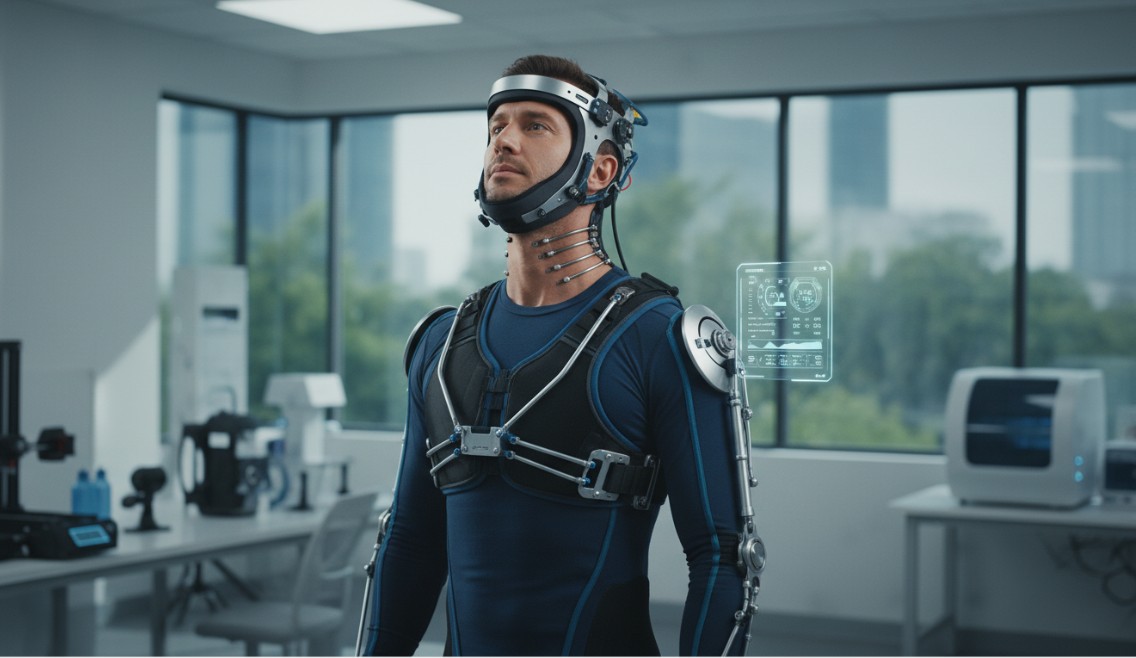
Head–Neck Exoskeleton for Neck Pathology Detection and Assistive Actuation
Neck disorders are common, yet objective, repeatable assessment of cervical function remains limited in many clinical settings. We are exploring a robotic solution that can both measure neck performance and support movement when needed—turning subjective observation into quantifiable signals.
What we are building
CEMRR is developing a head–neck exoskeleton designed for two integrated functions:
Neck pathology detection through instrumented motion assessment, and
Actuation potential to deliver safe, assist-as-needed support.
The system is grounded in cervical biomechanics and enables controlled movement across three axes, allowing structured evaluation of range, symmetry, and movement quality.
What’s new
The concept is inspired by the work of Sunil Agrawal, with two key upgrades in our approach:
Expanded range of motion (ROM): broader and more clinically useful movement coverage
Adaptability to different body types: improved fit and alignment to accommodate anatomical variability
How it works (research direction)
Our ongoing research focuses on translating multi-axis motion into interpretable indicators for clinicians and researchers, linking kinematic patterns to potential signs of dysfunction while ensuring safe, comfortable interaction for users.